



1
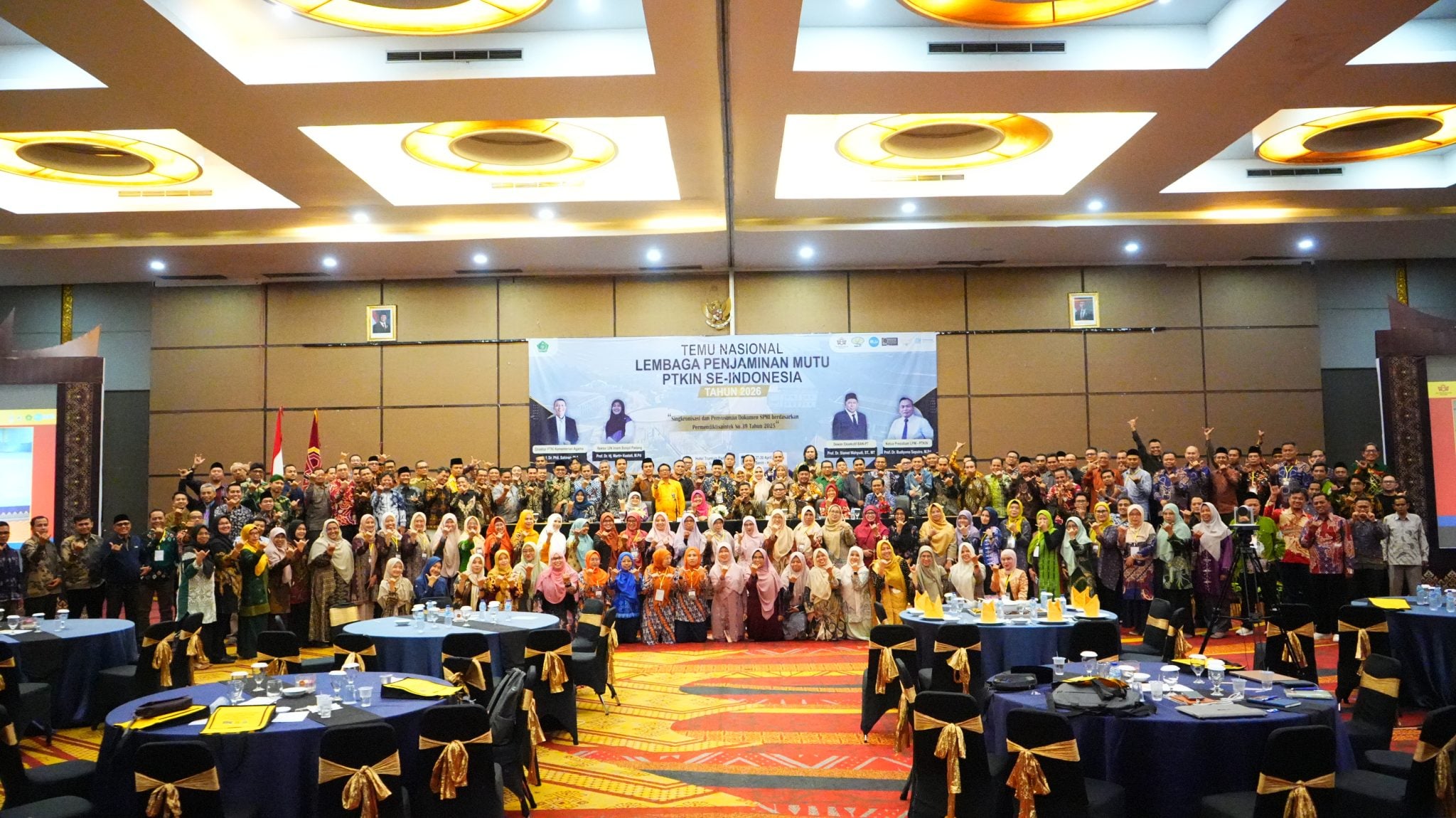
Padang — Institute for Research and Community Service (LP2M) UIN Sayyid Ali Rahmatullah (UIN ONE) Tulungagung also participated in the activities National Meeting for PTKIN Quality Assurance throughout Indonesia 2026 which was held at Hotel Truntum Padang and UIN Imam Bonjol Padang, West Sumatra, on April 27–30 2026. This activity carries a theme “Synchronization and Preparation of SPMI Documents based on Permendiktisaintek No. 39 2025.”
In this activity, LP2M UIN SATU Tulungagung delegated Dr. Lailatuzz Zuhriyah, M.Fil.I. as Head of the Research Center and Daily Executive (Pls.) Chairman of LP2M UIN SATU Tulungagung and Secretary of the LP2M PTKIN Forum throughout Indonesia, with Prof. Dr. H. Muhammad Muntahibun Nafis, M.Ag. as Head of the Center for Community Service LP2M UIN SATU Tulungagung.
This activity, which was centered in Padang City, was attended by leaders of LPM and LP2M PTKIN/PTKIS throughout Indonesia. UIN Imam Bonjol Padang is trusted to host this national activity involving hundreds of participants from various Islamic religious universities in Indonesia.
This national meeting aims to equalize perceptions of the implementation of the Internal Quality Assurance System (SPMI) in accordance with Minister of Education and Technology Regulation No. 39 Year 2025, increasing the capacity of quality assurance institutions, strengthening the quality culture of higher education, supports the achievement of IAPT-based superior accreditation 4.1, as well as strengthening collaboration between PTKIN.
The activity was officially opened by the Chancellor of UIN Imam Bonjol Padang, Prof. Dr. Hj. Martin Kustati, M.Pd. In his speech, he emphasized that the SPMI document was not only prepared to meet accreditation needs, rather it must be the main instrument in sustainably maintaining the quality of higher education.
Meanwhile, Chairman of the PILJAMU Presidium, Prof. Dr. Budiyono Saputra, M.Pd., invites all participants to unite their vision in preparing quality documents, especially related to education, study, and dedication to the community.
In the main material session, Participants received reinforcement regarding the implementation of the SAPTO-based accreditation system 2.0 and IAPT Instruments 4.1 which was conveyed by the BAN-PT Executive Board, Prof. Dr. Slamet Wahyudi, M.T. This material emphasizes the importance of integration between SPMI and SPME as well as strengthening a performance-based quality culture (outcome-based accreditation).
Apart from attending plenary sessions and quality document preparation workshops, the LP2M UIN SATU Tulungagung delegation was also actively involved in the discussion forum on developing the research roadmap, PPEPP guidelines, and strengthening the quality documentation of the tridharma of higher education.
In this activity, Director of Islamic Religious Higher Education, Ministry of Religion of the Republic of Indonesia, Prof. Dr. Phil. Sahiron Syamsuddin, M.A., also provided strategic direction regarding the importance of strengthening the quality of data-based PTKI, internationalization of higher education, as well as the integration of classical Islamic scholarship in the development of modern scientific disciplines.
Not only that, This national forum also produced a number of important documents, including SPMI documents based on Permendiktisaintek No. 39 Year 2025, PPEPP guidelines, research guidelines, research roadmap, and strengthening the quality documentation system.
At this momentum, a cooperation agreement was also signed (MoA/PKS) between LP2M and LPM PTKIN throughout Indonesia as a form of joint commitment in overseeing the implementation of the quality of the tridharma of higher education in a sustainable manner. Dr. Lailatuzz Zuhriyah, M.Fil.I. also represented LP2M UIN SATU Tulungagung in signing the collaboration.
It is hoped that LP2M UIN SATU Tulungagung's participation in this national forum will further strengthen the governance of research quality and community service., while expanding the national collaboration network between PTKIN in realizing a culture of superior academic quality, adaptive, and globally competitive. (El-Zet)



 By
By