1
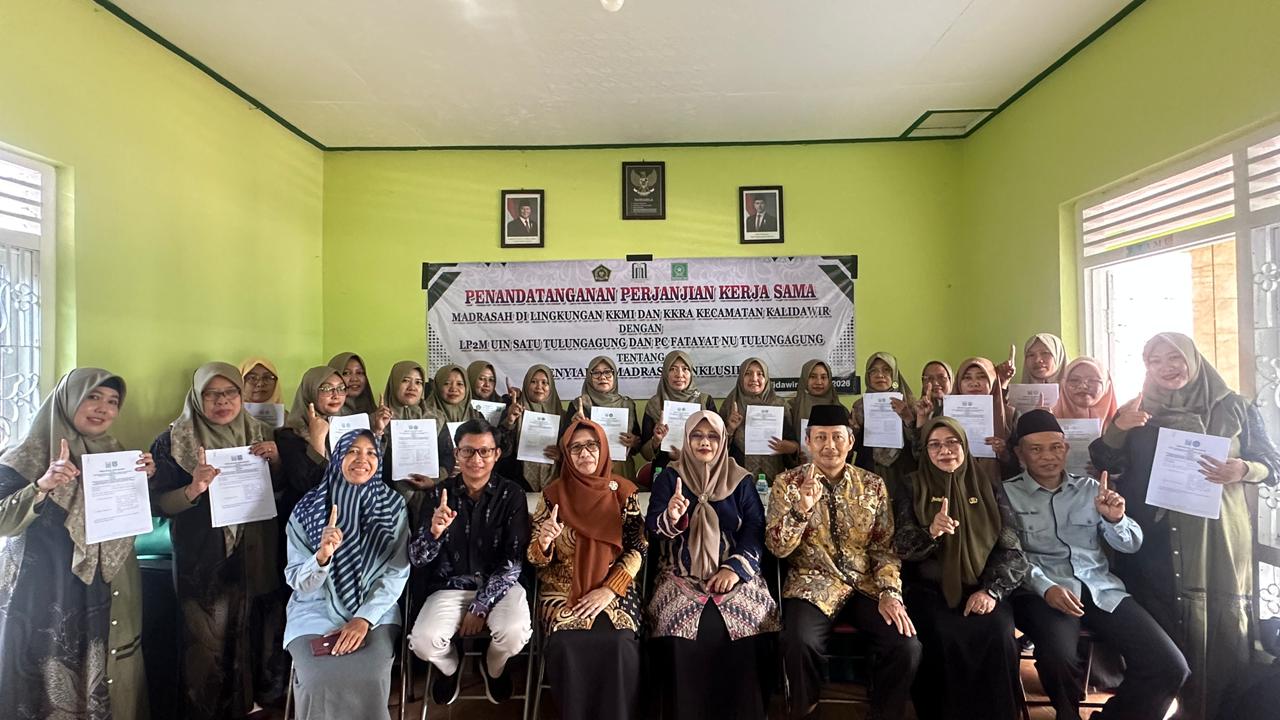
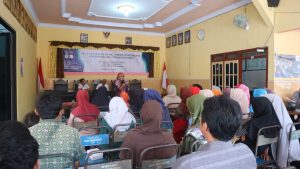
Tulungagung — The spirit of building inclusive and sustainable education continues to be strengthened by LP2M UIN Sayyid Ali Rahmatullah Tulungagung through the signing of a cooperation agreement with KKMI and KKRA Kalidawir District and Fatayat NU Tulungagung on Tuesday (13/05/2026). Activities that take place in the Supervisor's Office (Kanwas) Kalidawir is a strategic step in strengthening the collaborative ecosystem for inclusive madrasa development in the Kalidawir District madrasa environment..
This collaboration does not only focus on developing inclusive madrasas, but also includes improving quality in the field of education, study, dedication to the community, scientific publications, human Resource Development, to strengthening inclusion-based institutional programs. This is as stated in the text of the cooperation agreement between LP2M UIN SATU Tulungagung and KKMI and KKRA Kalidawir District.
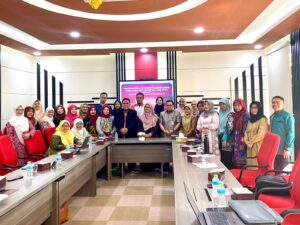
Present from the ranks of LP2M UIN SATU Tulungagung, Pls. Head of LP2M Dr. Lailatuzz Zuhriyah, M.Fil.I; Head of PSGAD, Dra. Umy Zahroh, M.Kes, Ph.D.; LP2M Secretary, Didin Wahyudin, M.Pd.; as well as the PSGAD Team Dr. Samsul Rifa'i, M.Pd.I. and Dr. Zulva Ismawati, M.Pd. Meanwhile, from Fatayat NU Tulungagung attended Hj. Alik Mudrikah, M.Pd. Head of KKMI and KKRA, Madrasah Supervisor and RA, as well as all heads of Madrasahs and RAs throughout the Kalidawir sub-district were also present.
The event began with an opening by the MC, followed by remarks from the Kalidawir District Madrasah Supervisor, Dr. Asrori Mustofa. In his speech, he said that the development of inclusive madrasas is one of the important programs of the Ministry of Religion in creating more friendly educational institutions, moderate, and upholding the values of inclusiveness.
According to him, The implementation of inclusive madrasas certainly requires preparation in various aspects, starting from qualified human resources, strengthening facilities and infrastructure, to adequate institutional system support. Because of that, Madrasas need to open space for collaboration with various parties so that these ideals can be realized optimally.
“Madrasas must be ready to face this challenge. Because of that, collaboration with various parties is required, including UIN SATU Tulungagung and Fatayat NU, so that the development of inclusive madrasas can run better and more sustainably,he said.
The next speech was delivered by the Chairman of KKMI Kalidawir, Erawan Abdullah, M.Pd. who expressed his appreciation and gratitude for the willingness of LP2M UIN SATU Tulungagung and Fatayat NU Tulungagung to jointly accompany madrasas in the Kalidawir area.
“However, These madrasas are siblings of UIN, because both are under the Ministry of Religion,” he said.
He hopes that this cooperation will not stop at just signing documents, but can really be followed up in various real programs that have an impact on madrasa development and improving the quality of education.
Meanwhile, Pls. Chairman of LP2M UIN SATU Tulungagung, Dr. Lailatuzz Zuhriyah, M.Fil.I. express gratitude for the trust 46 madrasas under KKMI and KKRA Kalidawir which have collaborated with UIN SATU Tulungagung in developing inclusive madrasas.
In his speech, He emphasized that this collaboration is in line with the institutional development direction of UIN SATU Tulungagung which carries the jargon "UIN SATU SIP", namely Sustainability, Inclusive, and Partnership.
“UIN SATU also focuses on inclusive institutional development. Because of that, It is very appropriate if UIN can collaborate with madrasas that have the same attention to inclusive institutional development,he explained.
He also added that the scope of future cooperation will not only be related to the development of inclusive madrasas, but also includes collaborative research, dedication to the community, scientific publications, strengthening religious literacy, gender and disabilities, as well as sustainable human resource development.
The activity then continued with the signing of a cooperation document between the parties, prayer together, and joint documentation sessions. It is hoped that this momentum will be the beginning of strengthening synergy between universities, community organization, and madrasa educational institutions in building inclusive Islamic education, moderate, and responsive to community needs. (El-Zet)

 By
By