1
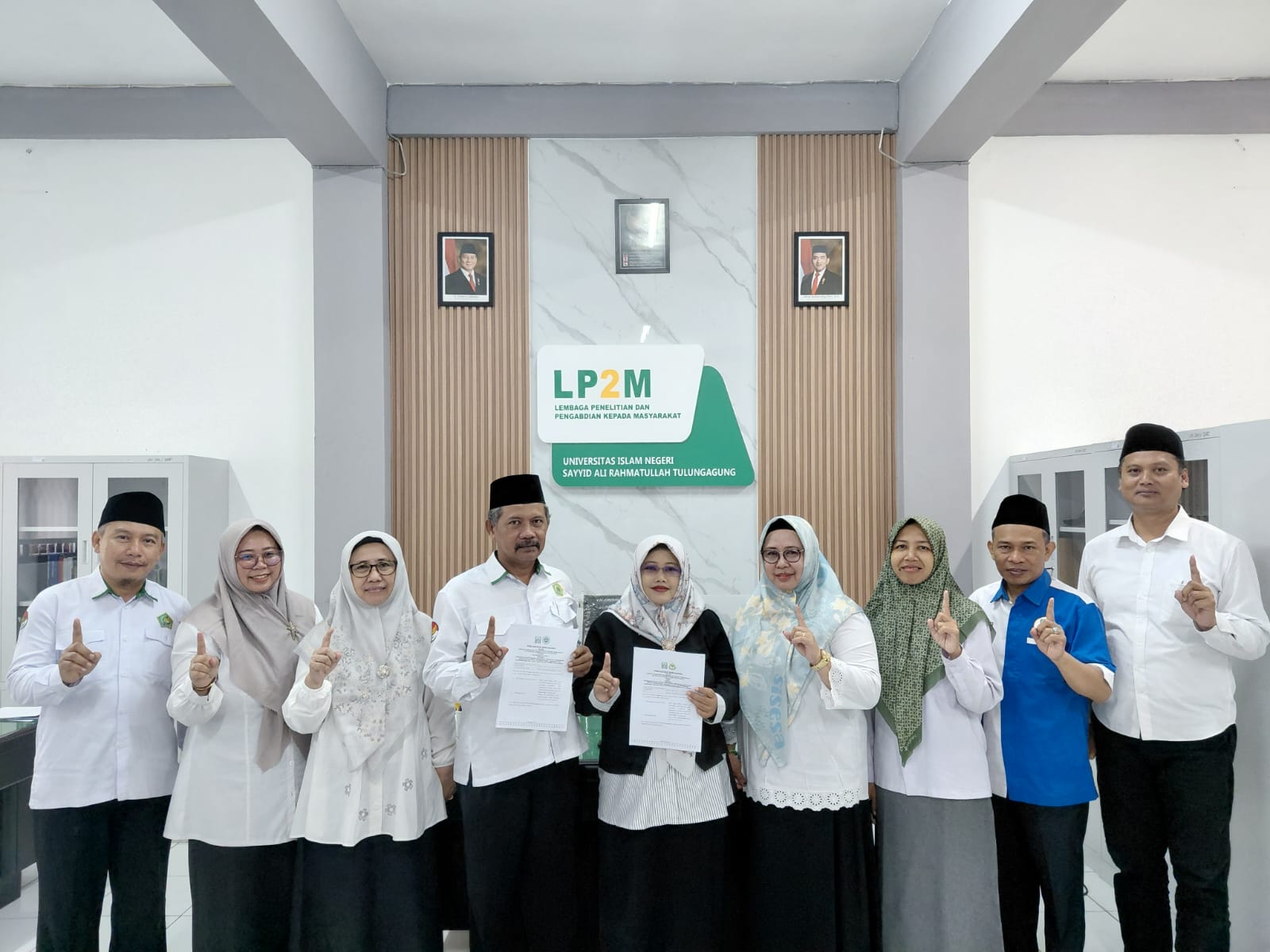
Tulungagung — The commitment to strengthen inclusive madrasas which was previously marked through the signing of a cooperation agreement at the Kalidawir Supervisory Office continues to be followed up concretely by LP2M UIN Sayyid Ali Rahmatullah Tulungagung together with KKMI-KKRA Kalidawir District and Fatayat NU Tulungagung.
Six days after signing the cooperation agreement, precisely on 19 Mei 2026, Kalidawir District KKMI-KKRA management together with the Chair of Fatayat NU Tulungagung made a follow-up visit to the LP2M UIN SATU Tulungagung office to discuss strategic steps for implementing an inclusion-based collaborative program.
The group was welcomed directly by Plh. Chairman of LP2M UIN SATU Tulungagung, Dr. Lailatuzz Zuhriyah, M.Fil.I., accompanied by the Head of PSGAD Dra. Umy Zahroh, M.Kes., Ph.D., along with the PSGAD team, namely Dr. Samsul Rifa'i, M.Pd.I. and Dr. Zulva Ismawati, M.Pd..
The meeting was warm and productive with a focus on preparing priority programs that will soon be realized in the development of inclusive madrasas within the KKMI and KKRA Kalidawir District.
One of the agendas that will soon be implemented is disabled volunteer training organized by LP2M UIN SATU Tulungagung. This program will not only involve students and volunteers, but also includes madrasah teachers and RAs as part of strengthening human resource capacity in managing inclusive education.
Besides that, During the meeting, plans for collaborative community service activities with the theme of inclusion were also formulated. The program will be developed through various schemes, including Inclusion KKN, madrasa assistance, to inclusive madrasa management training involving expert staff from UIN SATU Tulungagung and Fatayat NU.
Pls. Chairman of LP2M UIN SATU Tulungagung, Dr. Lailatuzz ZuhriyahM.Fil.I., conveyed that this follow-up was proof that institutional cooperation did not stop at signing administrative documents alone, but directed at real implementation that has a direct impact on society and educational institutions.
According to him, Inclusive madrasa development requires collaborative work across institutions, especially in preparing an educational ecosystem that is friendlier to children, disabled, as well as social and cultural diversity.
“Inclusive madrasa development is not enough just on the policy aspect, but also requires strengthening human resource capacity, institutional assistance, and ongoing involvement of many parties. Because of that, It is hoped that this collaboration can become a model for strengthening inclusive education based on partnerships,he said.
Through this meeting, LP2M UIN SATU Tulungagung together with KKMI-KKRA Kalidawir and Fatayat NU Tulungagung hope that various innovative programs will be born that can strengthen the culture of inclusivity in the madrasa environment, while supporting the realization of moderate Islamic education, ramah, and social justice. (El-Zet)

 By
By