1
By: Head of the Center for Gender and Child Studies at UIN Satu Tulungagung
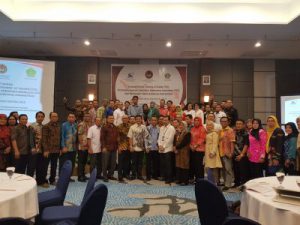
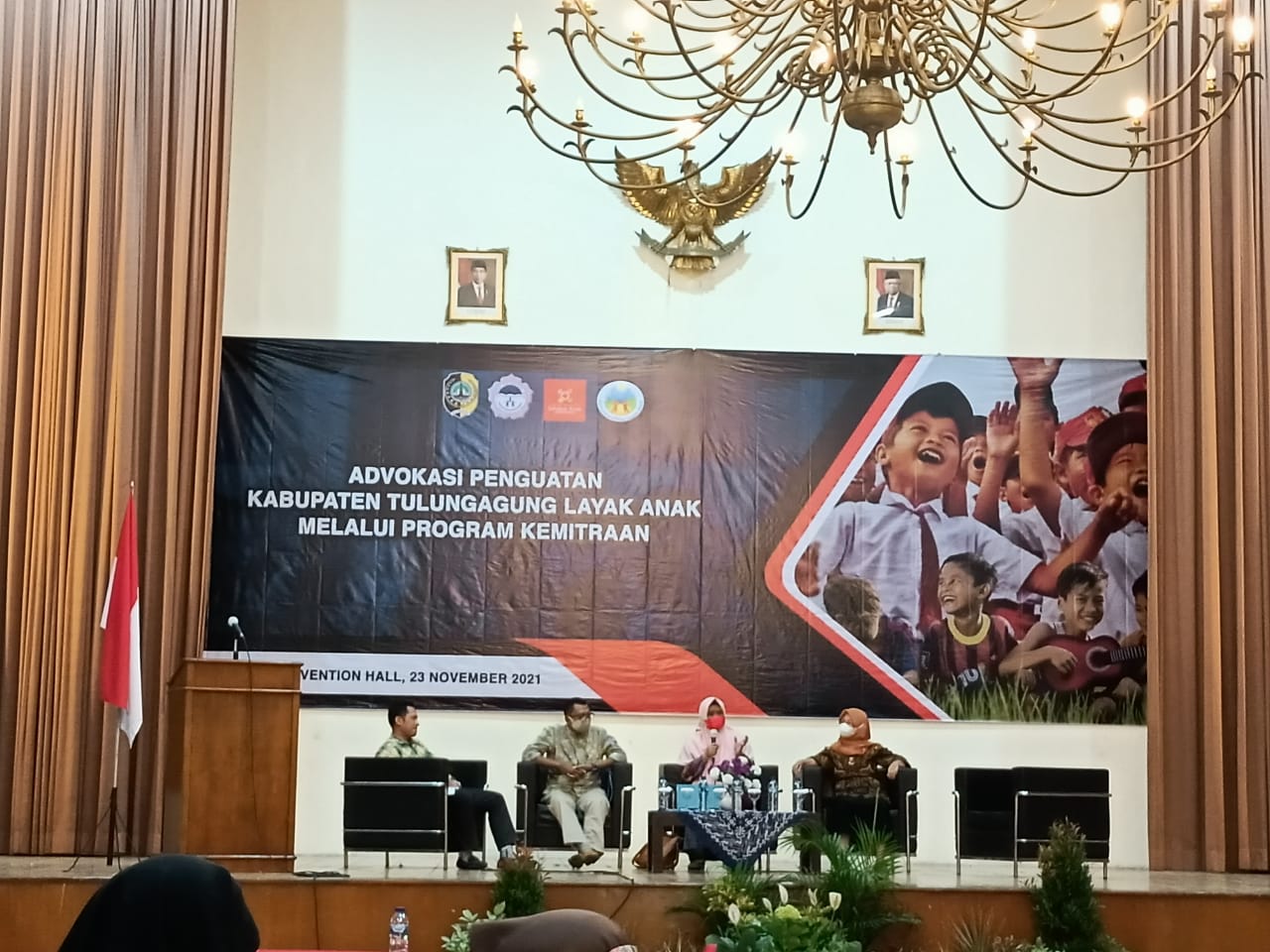
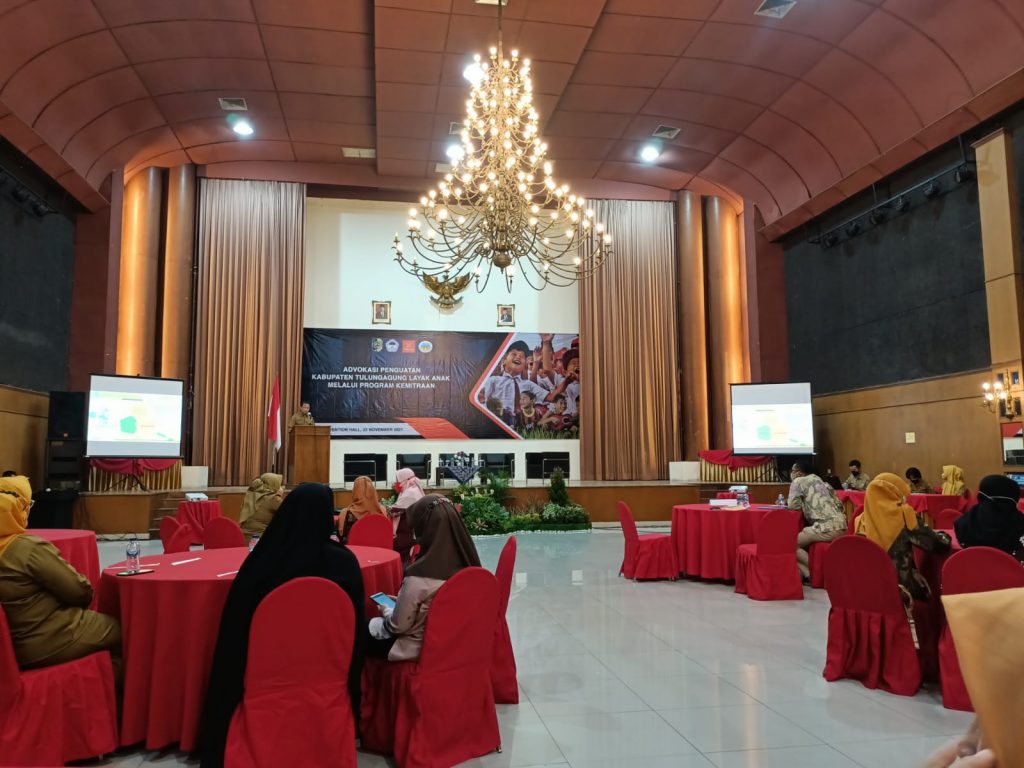
Tulungagung – 23/11/2021. PSGA UIN Satu Tulungagung had the honor to attend the invitation of the Tulungagung Regency Government together with the Indonesian Children's Friends Company Association (press) Tulungagung Regency held Advocacy for Strengthening a Child-friendly Regency through a partnership program which took place at the Barata Convention Hall Tulungagung.
The event was opened by the Head of the Tulungagung Regency Bappeda, In his speech he explained that children's issues in Tulungagung Regency include: : First number of children 285.465 Soul (26,19% of Population), second Infant mortality rates tend to fluctuate year to year 2020 as much as 10,20%, third Tulungagung is one of the highest sending areas for migrant workers in East Java, fourth 65 Orphans, stray, or orphaned due to Covid-19, fifth Violence against children still occurs. Therefore, Tulungagung Regency took the initiative to carry out advocacy to strengthen Tulungagung Regency as child friendly through a partnership program that collaborates with the business world., mass media, academy, child protection agencies and government.
The role of the Indonesian Children's Friends Company Association (press) in developing Tulungagung Regency child-friendly, among others 1) how company policies can be pro-child, 2) Where the company's environment is located, it must be child-friendly, for example by implementing corporate social responsibility, And 3) how a business or company ensures that its products are safe and friendly for children.
KLA (Child Friendly District ) is a Regency/City that has a development system based on children's rights through integrating government commitment and resources, society and the business world that are comprehensively planned and sustainable in policy, programs and activities to fulfill children's rights by collaborating with the government, society and CSR.
Collaboration is not just coordination but working together (not both work); Collaboration is organized in the system (NSPK); Public (including NGOs and mass organizations) and the business world that has potential sources for fulfilling children's rights is identified and included in child development governance. So it is clear what the government is doing with these resources (assistance, coordination, reference section, etc. as needed. Collaboration is not just coordination but working together (not both work); Collaboration is organized in the system (NSPK); Public (including NGOs and mass organizations) and the business world that has potential sources for fulfilling children's rights is identified and included in child development governance. So it is clear what the government is doing with these resources (assistance, coordination, reference section etc. as required.
Legal Basis for Corporate Social Responsibility / CSR : First Law no 40 year 2007 regarding limited liability companies "companies that carry out their business activities in the field of and/or related to natural resources are obliged to carry out social and environmental responsibilities" article 74 verse, Second Government regulation no 47 year 2012 "social and environmental responsibilities are carried out by the board of directors based on the company's annual work plan after obtaining approval from the board of commissioners or the general meeting in accordance with the company's articles of association, unless otherwise specified in statutory regulations” art 4 verse
Third Law no 25 year 2007 regarding investment "every investor has an obligation: carry out corporate social responsibility.” What is meant by "corporate social responsibility" is the responsibility inherent in every investing company to continue to create harmonious relationships, balanced, and compatible with the environment, mark, norma, and the culture of the local community” art 15 letter b, Fourth BUMN Ministerial Regulation Number Per-05/mbu/04/2021 concerning Social and Environmental Responsibility Programs for State-Owned Enterprises, And Fifth Tulungagung Regency Regional Regulation Number 5 Year 2012 on Corporate Social Responsibility.
APSAI's role in realizing a Child Friendly District is based on PP 5 in PN 3 RPJMN 2020-2024, on Child Protection. As for the policy direction: Improving the quality of children, women and youth. The strategy : Realizing an Indonesia Friendly for Children through strengthening the Child Protection System which is responsive to the diversity and characteristics of children's areas to ensure children enjoy their rights, covers: 1) Strengthening regulations and law enforcement that are proportional to the best interests of children. 2) Strengthening institutional effectiveness through increasing human resource capacity, service provider, coordination, data and information systems, as well as construction and supervision functions. 3) Increased understanding of child protection for stakeholders, public, family, and child. 4) Strengthening networks between government and communities, mass media, business world, and community institutions. 5) Increasing children's participation in development according to their age maturity level. 6) Strengthening efforts to prevent and handle various acts of violence, exploitation including the issue of child labor, and child neglect. 7) Strengthening coordination and synergy in efforts to prevent child marriage by involving various stakeholders. 8) Strengthening care in the family environment and temporary care in other institutions. 9) Increased access to integrated basic services, friendly and inclusive for all children, especially for children in special situations and conditions. And 10) Improved services and rehabilitation for children who need special protection.
ANUGERAH PELANGI is an award and certification for child-friendly companies given to business people. Companies in Indonesia must also have a moral responsibility to continue to create healthy Indonesian children who grow and develop intelligently, cheerful and of noble character and protected from violence. One of KLA's partners, Kampung Susu Dinasty, collaborates with many schools from PAUD to high school level where they need a place for learning outside the classroom. (outing class).
Susu Dynasty Village contributed to the success of the APSAI program, namely by taking steps and policies. Among others are : 1) Eliminate child labor in all business activities, 2) Providing child-friendly play equipment and play facilities, 3) Making products that support children's nutrition, 4) Create an educational package program which is a safe means of learning while playing for children. And 5) Stimulate children to love and develop children's interest in animal husbandry.
[AN/NA]

 By
By