1
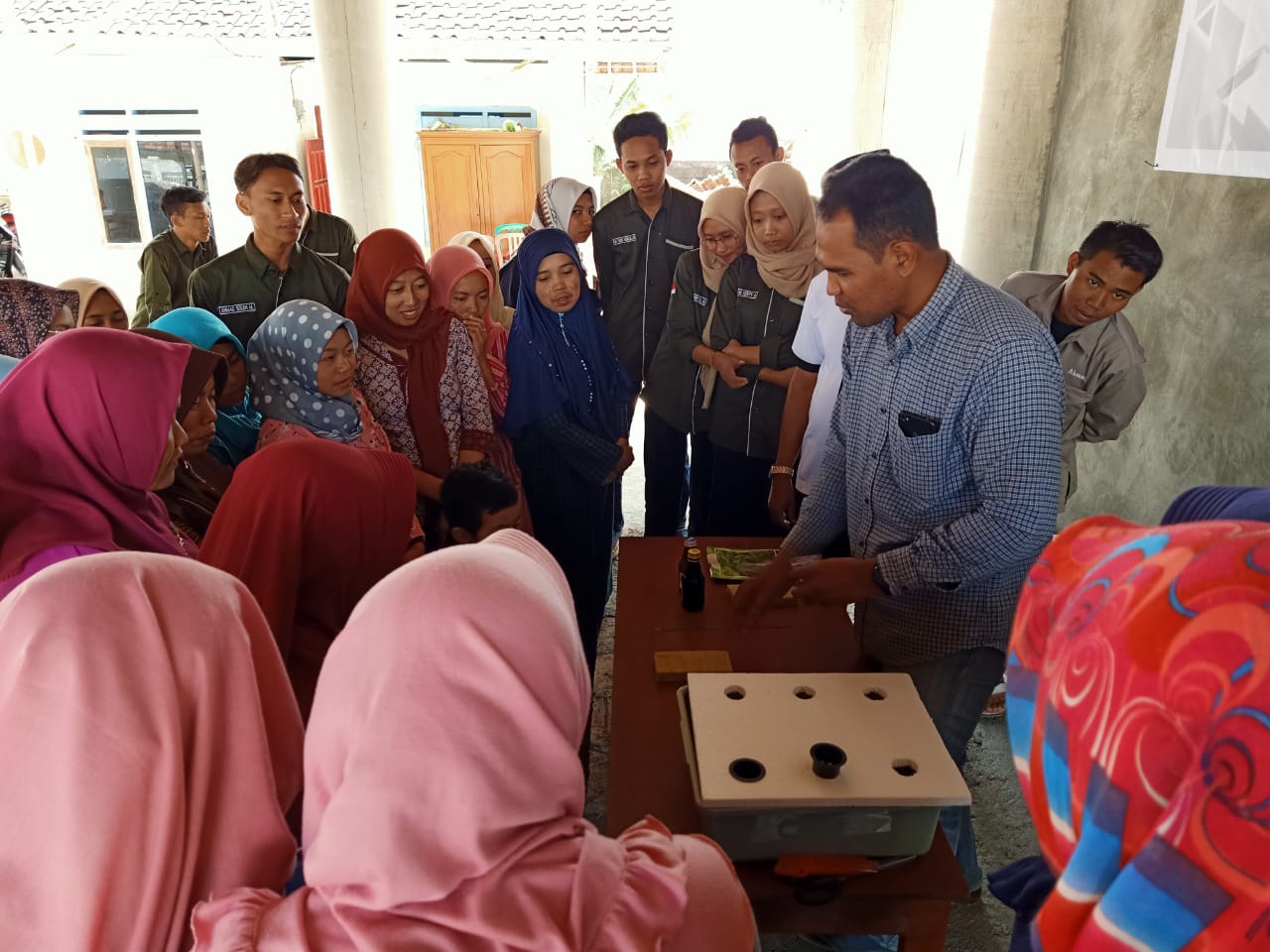
SUKOKIDUL, TRENGGALEK – KKN Mental revolution in Sukokidul Village 2 held the first work program with the theme of the Independent Indonesia movement, namely "training in hydroponic plant cultivation", Wednesday, 07 August 2019.
The background of this work program is to deal with the arid land in this village and overcome the problem of limited water so that people can still carry out farming activities using modern farming methods, namely hydroponics..
We brought in a resource person, an entrepreneurship trainer from Gandusari Trenggalek, namely Ruly Budiyanto. The event was attended by several village officials, 10 members of the PKK women in Sukokidul village, 10 Muslimat members and 10 fatayat members. Apart from that, the invited guest was the head of Sukokidul village, Mr. Trimo, sub-district coordinator administrator and KKN village coordinator Pule Trenggalek.
Before the event starts, check-in is carried out and food and stationery are handed over. Guided by one of the KKN members as host and moderator. Right on time 09.00 WIB the event started and began with a speech from the village head, then the moderator gave a brief introduction regarding the material that would be presented and reading data from the resource person..
Followed by Ruly's presentation of the material. Today's series of events is first a socialization on the introduction of hydroponic plants, then a question and answer session and will continue with direct planting practice.
Previously, the speaker said that hydroponics is suitable for use in areas with minimal water, because using hydroponics can save approx 90 percent water than using soil media.
Then Ruli explained the meaning of hydroponics, namely hydro means water and panos works or can be said to be a technique or method of farming without using land but using water and nutrients.. This means that even though hydroponics can save water, it cannot run without water.
The resource person also conveyed several reasons for implementing hydroponics, namely, firstly, the yield and quality of the plants are higher, more free from pests and diseases, more efficient use of water and fertilizer, able to overcome land problems, can overcome the problem of limited land.
Then nutrients for hydroponics, previously explained the essential growth actor, namely water, light, CO2 nutrition, These essential nutrients are absolutely needed by plants. The division is based on needs, the first is macro, namely large content (%)- much needed (kg/ha) – N, P, K, Ca, Mg. S and micro are small contents (ppm)-little is needed (g/ha)-Fe, Mn, Cu, Co, B, Mo, Cl.
There are several types of hydroponic plants, namely vegetables, fruit and ornamental plants. The source also explained that the key to success in hydroponics is the cleanliness of the container, planting media, plants used and nutrients. planting media that can be used, among others, charcoal, coconut shell, gravel, pasir, coconut fiber, silicates, fragments of coral or brick, pieces of wood, Therefore. Then place it on the pot, I can't, used aqua/glass aqua, ice cream glass, dll.
The next explanation is about planting models, there are several types of planting models that first use the wicks system. In this system nutrients flow to the plant roots with the help of a wick through capillary action. This system can also use an air pump to create air bubbles in the tub, but without an air pump it's not a problem because this system is a passive system (water does not flow) The thing you need to pay attention to is mosquito larvae which often nest in the tub.
To overcome this, check the nutrient water in the tub once a week. Second, floating raft system ( raff system), in this system the plants are floated into the nutrients using styrofoam.
Hydroponics with this system is very easy to implement on a business scale, usually this system is equipped with an air pump to help supply oxygen. Third, sistem NFT (Nutrient Technical Film), This system is widely adopted by business-scale hydroponic plantations. The nutrient water that flows about the plant roots is as thin as a film.
This system requires a pump to circulate the nutrient water. Plants are placed in gutters or PVC pipes, then the nutrients flow. Nutrients will flow from one end of the gutter to another and be collected, From the nutrient reservoir it flows back into the gutter continuously.
Fourth, metode dutch bucket, This method is widely used for growing tomatoes, The pots are filled with perlite planting medium, zeolite or hydrotane. Nutrients are flowed through small pipes and hoses using a pump. Nutrient water flows from the surface of the pot to the bottom of the pot towards the plant's roots.
The bottom pot has no holes , The pot is perforated in the side and fitted with a pipe to drain the remaining nutrients to the reservoir. The nutrients in this reservoir will be pumped back into the pots continuously.
Fifth, metode drip irrigation, This method uses the principle of nutrients dripping into the planting medium. The pots are filled with planting media such as: cocopeat, roasted husks or a mixture of both. Nutrients are removed using a pump which is channeled through a small hose fitted with a dripper.
The drip duration can be set using a timer, for example, the duration of the drip 15 minutes and three times a day. On a hobby scale, we can use used bottles with plant water spikes or used bottles, small hose and bubble set. Sixth, aeroponic system, This system uses a nutrient misting system at the plant roots, The plant roots are placed hanging, and at the bottom a thin spray of nutrients is made using a pump.
After the presentation from the resource person, open a question and answer session by the moderator, Participants were very enthusiastic and had great curiosity. From there the forum becomes more lively because of the reciprocity between the audience and the resource person. Right on time 11.00 the discussion forum is closed, and continued with direct practice in the field.
From the number of audiences divided into 4 groups and guided directly by resource persons. In practice, the technique for cutting planting media in the form of rockwool is explained, seed planting and irrigation. Apart from that, information is also provided about nutrient and water dosages before transferring plants to net pots, namely 1 liters of water with 5 ml nutrition A and 5 ml of nutrient B then stirred by hand.
The seeding process takes 1×24 hours and can be moved into a net pot once the plant has a number of leaves 4.
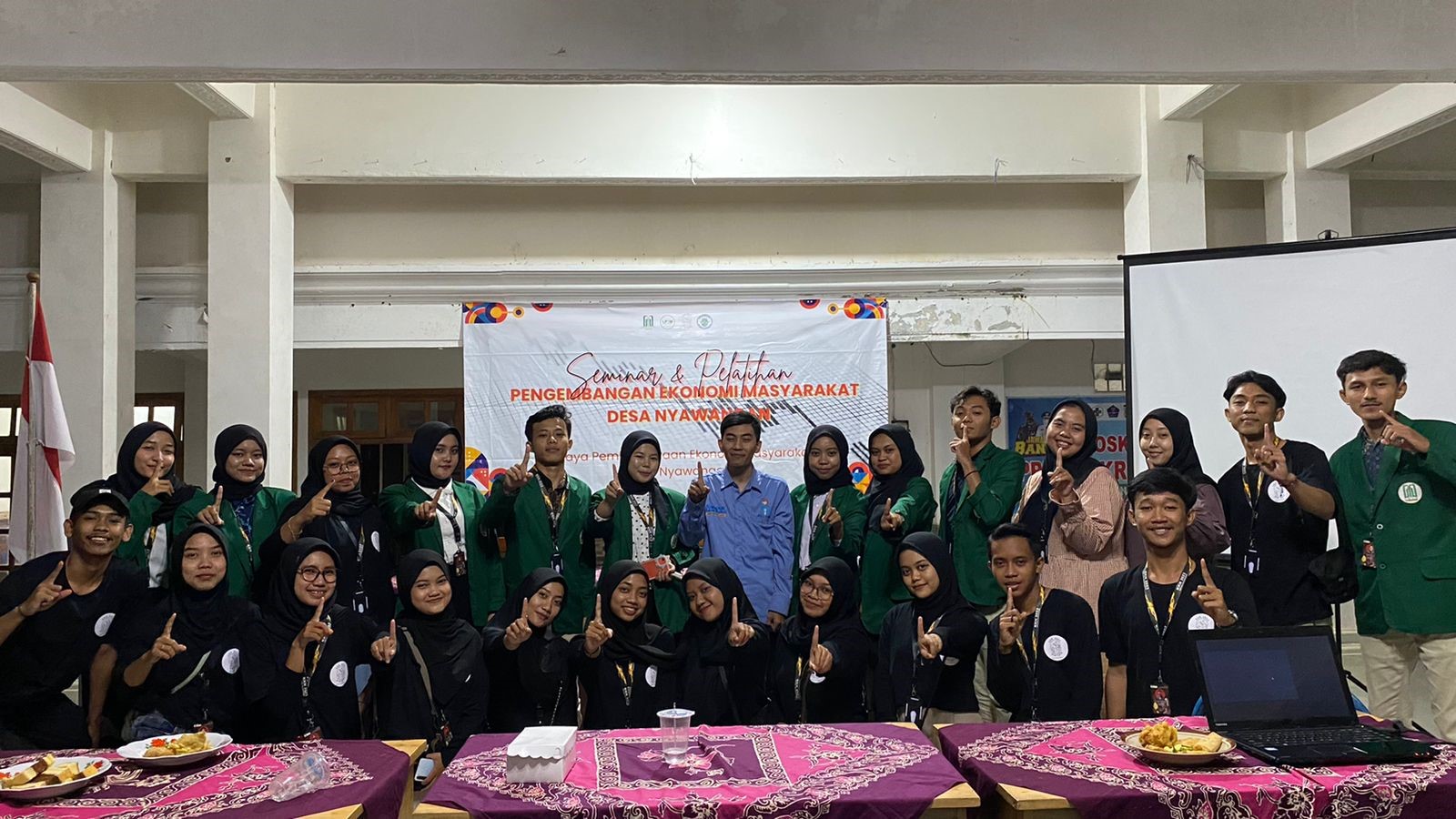
O'clock 13.00 WIB the series of events has been completed and ended with the awarding of a certificate of appreciation to Mr. Ruly as a resource person by Mr. Trimo as the head of Sukokidul village. Then continued with photos with all participants and invited guests.
As a follow-up to this training, we are creating a hydroponics group which will be accompanied directly by Mr. Ruly. We hope that by holding this program we can broaden people's knowledge and remain productive even with limited water. (Lilis Hendrawati)

 By
By