1
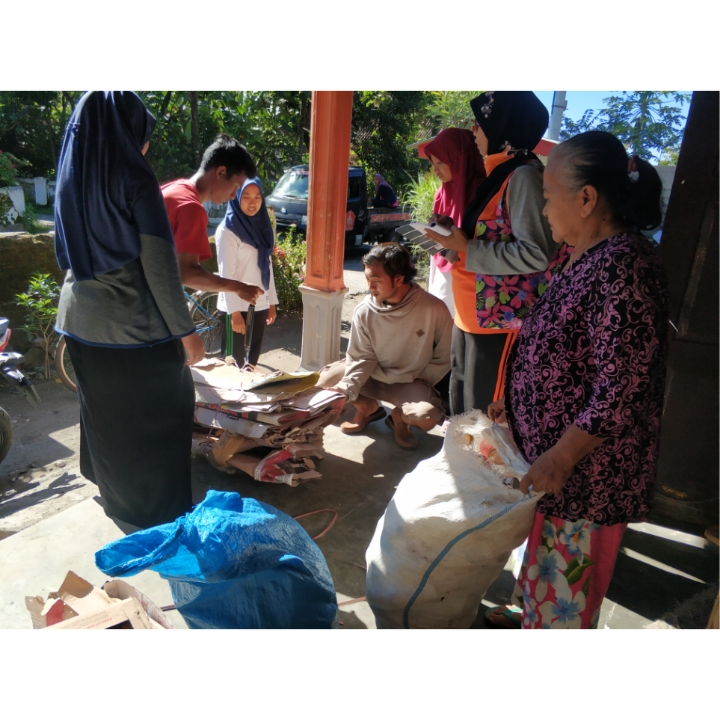
Kotes, Blitar – According to Vita, The Head of the Gandusari District Waste Bank Mobilizer, precisely in Kotes Village, has routine activities which are carried out once a month at the end of the month. This activity is related to waste management, The name of the activity is a waste bank which has been revived by UNISBA students (Blitar Islamic University). The reason, This waste bank activity has long been dead or is rarely carried out anymore.
"Yes, usually this activity is held every Friday and Saturday, sis,"said Mrs. Endang as a waste bank officer. This is a habit for Kotes Village residents to care about the surrounding environment and also reduces the number of numbers piled up around the houses of Kotes Village residents..
This coincided with the presence of IAIN Tulungagung students who were carrying out KKN in Kotes Village. They took part in waste bank activities with PKK women from Kotes villages to lighten the mothers' burden- PKK women to pick up rubbish from residents' houses, Jum’at (17/01/20).
Having an operational car facilitated by village officials is very helpful in the waste collection system in each RT from one house to another. This activity began by gathering with PKK women at the village office and then dividing them into groups 3 group to pick up rubbish that has been collected by residents in each RT and RW, precisely in Kotes hamlet.
Right on time 09.00 IAIN Tulungagung students and PKK women began to split up according to distribution to stop by each resident's house to pick up the rubbish they had collected and bring scales and books to record the rubbish deposited by the residents.

The waste collected by residents is in the form of recyclable waste such as plastic waste, paper waste, and glass waste. The collected rubbish was then weighed and then recorded by post one KKN students how many kg of rubbish the residents deposited..
The process of exchanging waste into rupiah must go through several stages first, namely the waste that has been brought by the waste bank officer is deposited to the waste collector or what the Javanese usually call "tukang rosok" to be weighed again and then calculated according to its weight and then it can be exchanged into rupiah.. The rupiah deposited by residents is not immediately given directly to residents, However, residents receive the results of their waste deposits ahead of the holidays according to the amount and weight of waste recorded by waste bank officers.
This waste bank activity has truly reaped blessings for the residents of Kotes village. It's like saving, collecting things little by little and then becoming a hill, just like this waste bank activity, residents collect waste little by little until it piles up in large piles which can later be exchanged for rupiah. Apart from that, waste bank activities also aim to make residents aware of the importance of protecting the environment and getting used to throwing away rubbish in the right place.
by : Post Communications and Publications Division 1 KKN 2020 Kotes Village, District. Gandusari

 By
By